Why thought leadership design matters in consulting
May 25, 2026 | 12 min read
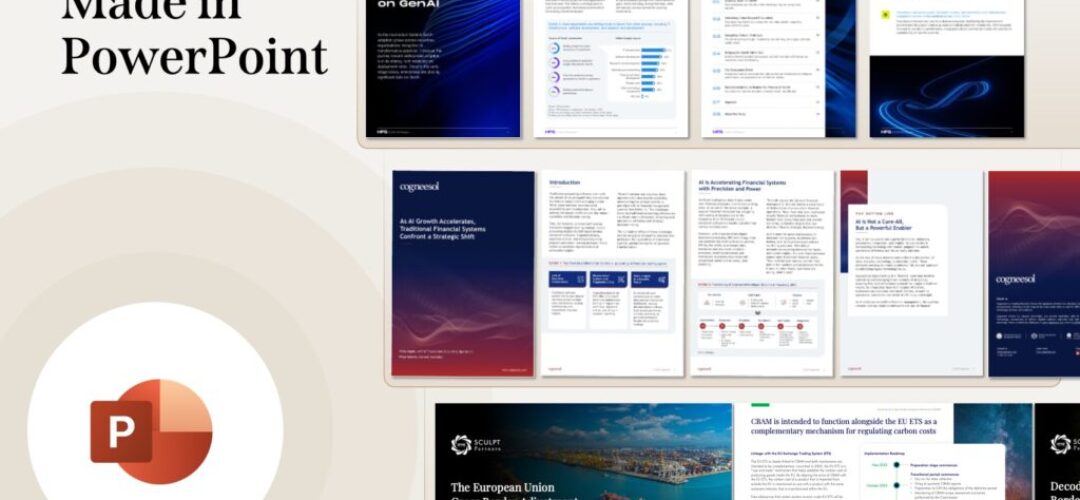
If your firm produces research that deserves a wider audience, this post breaks down what separates a formatted report from a publication, with real examples from HFS Research, Sculpt Partners, and Cogneesol.
Consulting and advisory firms spend months producing thought leadership. The research cycles are long. The analyst hours are expensive. The validation is rigorous. And when the final report is ready, it carries the intellectual weight of everything that went into it.
Then it gets formatted.
Not designed. Formatted. Someone opens a Word template, drops in the content, adjusts a few headings, exports to PDF, and calls it done. Or the firm cares deeply about how the thought leadership looks but has no clear path to getting it right. The designers they try do not understand research content. The internal team does not have the bandwidth. The output looks like a document, not like a publication.
Either way, the result is the same. Thought leadership that does not look like thought leadership. And thought leadership that does not look the part does not function like thought leadership.
What thought leadership design actually means
When thought leadership design is done well, the reader does not notice the design. They simply trust the content more than they expected to.
The gap that costs firms more than they realize
There is a specific kind of damage that happens when strong thought leadership is presented poorly. It is not dramatic. Nobody sends a reply saying your report was hard to follow. They just reference a competitor’s work in the next conversation. They forward the other firm’s study to the decision-maker. They cite someone else’s research in their own publication.
The thought leadership existed. It just did not travel.
Here is what that gap actually costs consulting, market research, and advisory firms:
Credibility that does not transfer. A poorly designed thought leadership report signals to the reader that the firm does not take its own intellectual output seriously enough to present it well. That is a perception problem that no amount of analytical depth can fix after the fact. The thinking is judged through the presentation before a single page is read.
Thought leadership that does not circulate. Research that is visually impenetrable does not get shared. A dense, unstructured report stays in inboxes. A study with no visual hierarchy, no clear entry points, no breathing room on the page, does not get forwarded to the person two levels up who actually makes the buying decision.
Positioning opportunities that go unused. Every piece of published thought leadership is a positioning touchpoint. It tells the market who you are, how you think, and what standard you hold yourself to. Firms that treat thought leadership as a formatting task miss the most powerful brand-building opportunity they have.
Pipeline that does not open. Thought leadership is supposed to generate conversations. It is supposed to make a prospect call. A report that does not land, that does not create a moment of recognition and trust, does not generate that call. The research becomes a cost center instead of a business development asset.
What it looks like when thought leadership design is done right
HFS Research
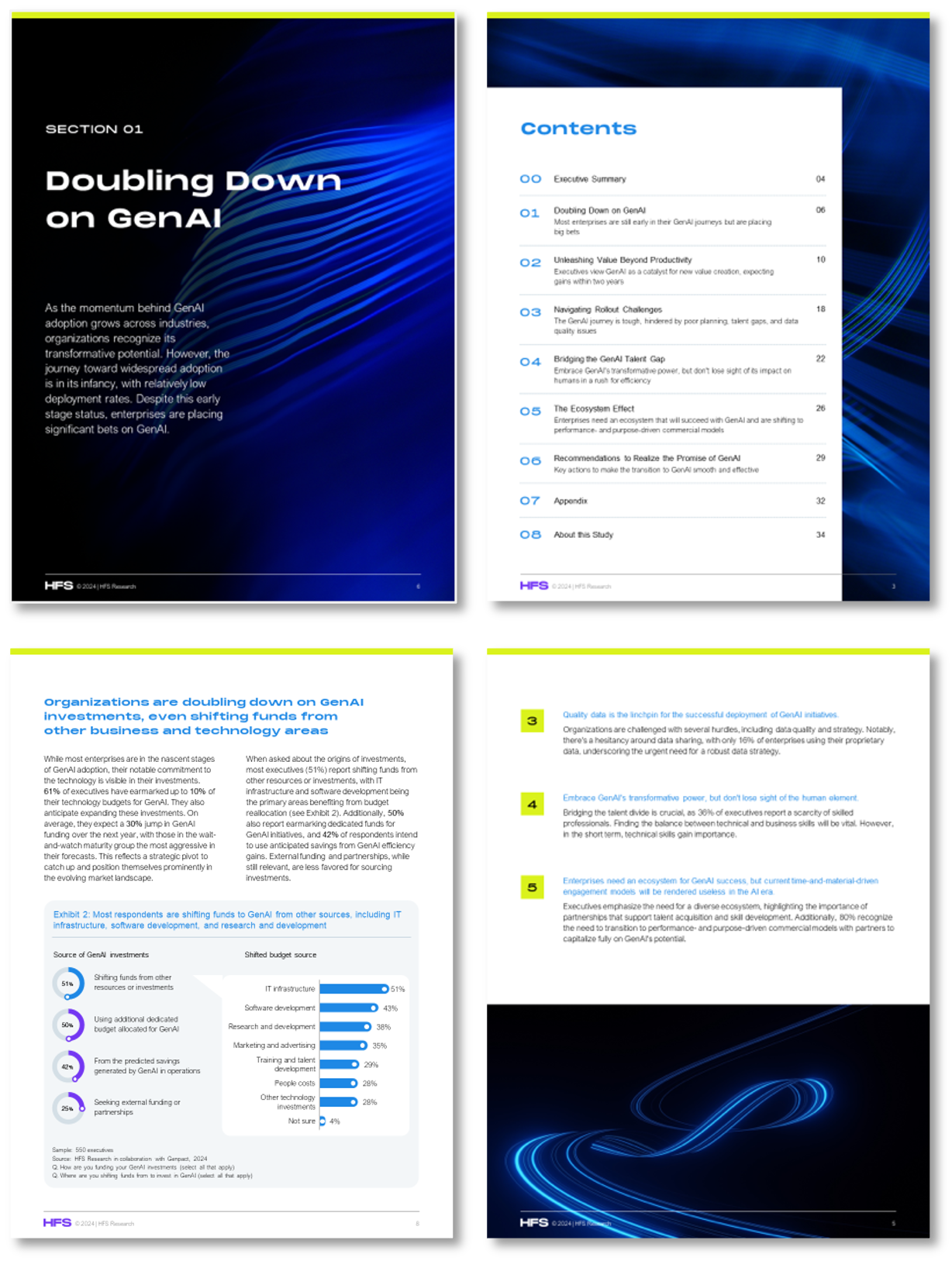
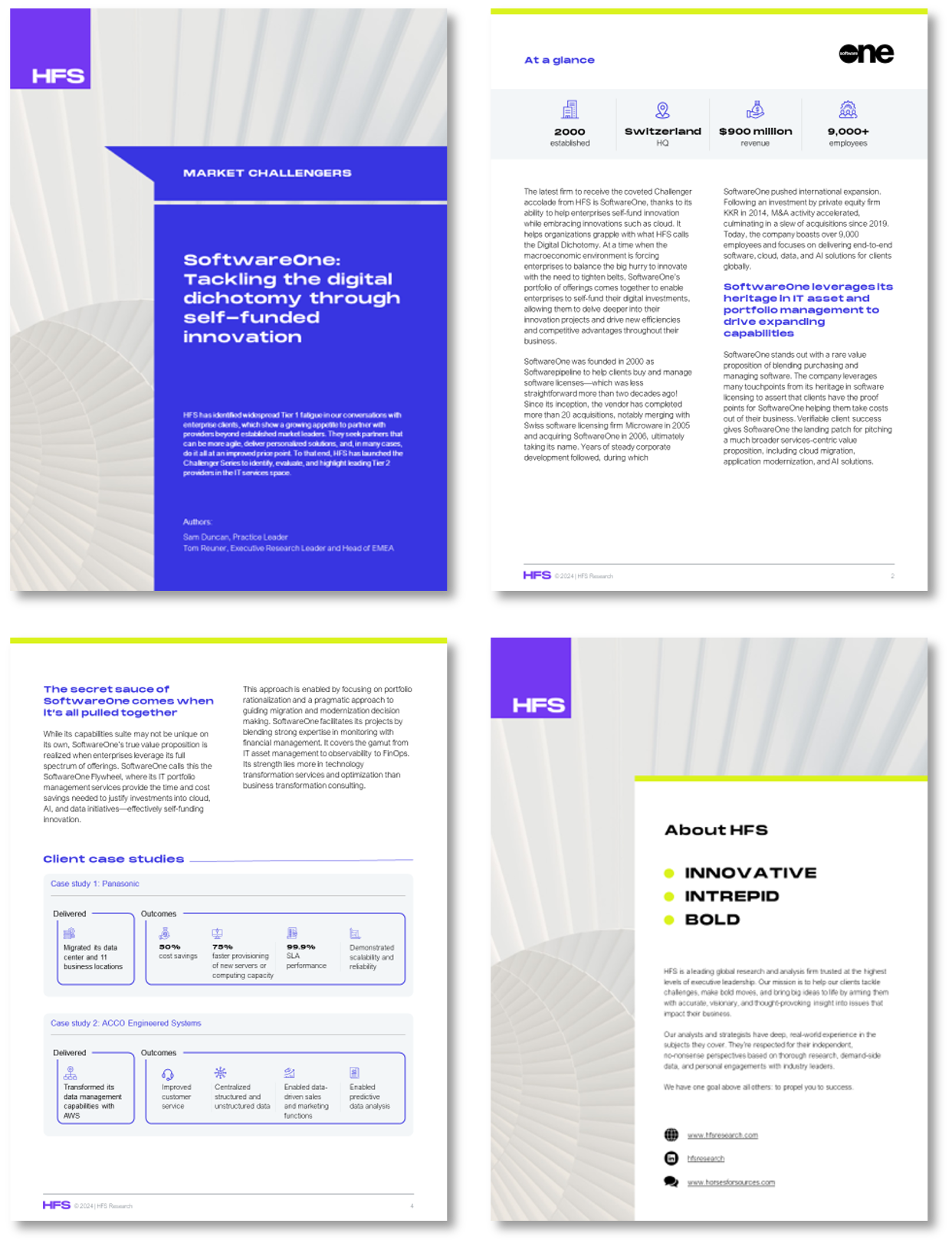
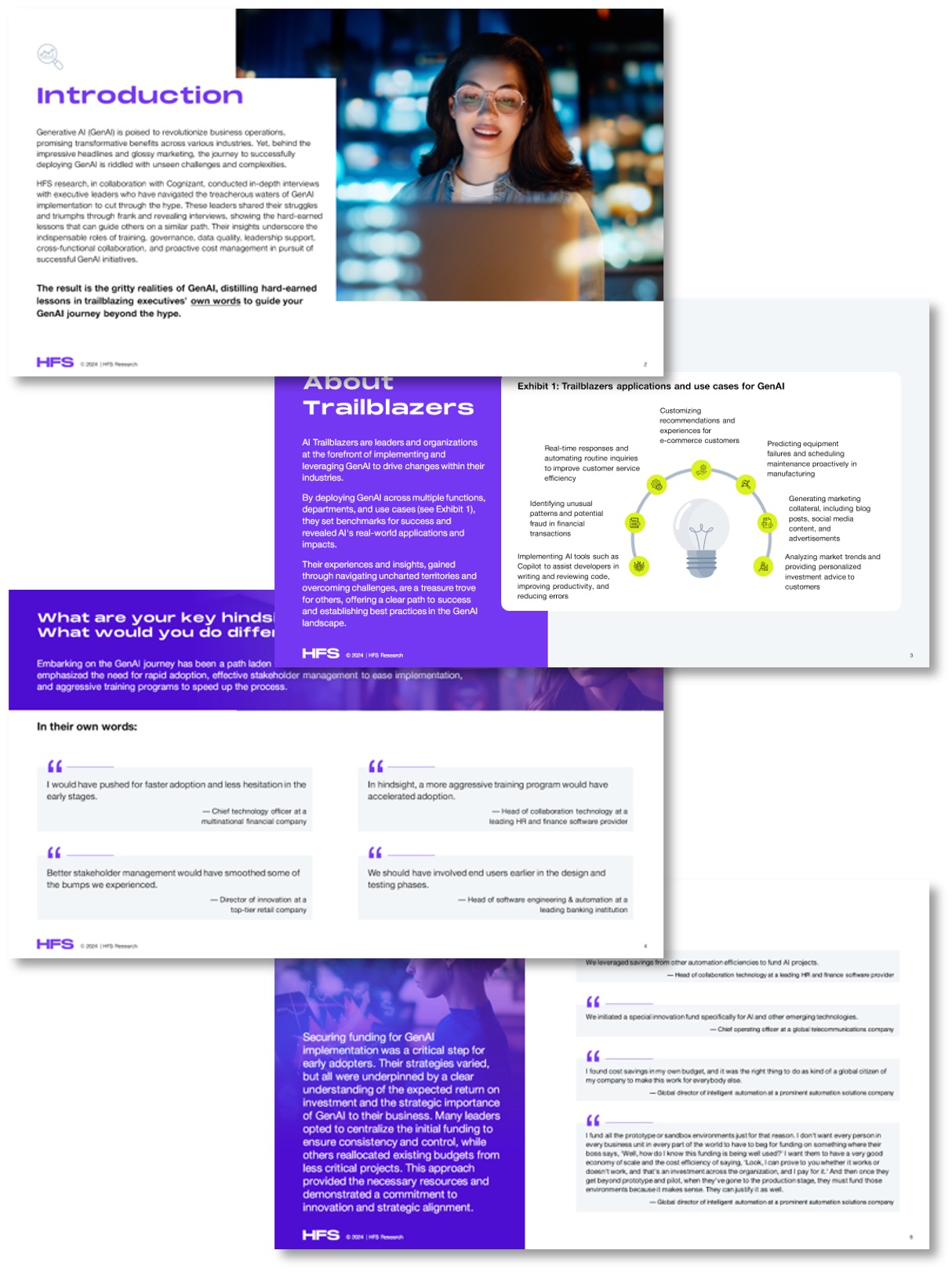
HFS Research is one of the most recognized analyst and advisory firms in the enterprise technology and services space. Their thought leadership reaches C-suite buyers, service providers, and institutional investors who have high expectations for everything that lands on their desk.
The HFS GenAI report is a strong example of the problem thought leadership design solves. The content is analytically rigorous. It covers GenAI adoption patterns across enterprises, budget shifts, talent gaps, and ecosystem dynamics. It is the kind of thought leadership that should travel widely, get cited repeatedly, and build HFS’s authority in a fast-moving conversation.
For thought leadership like this to do that work, the design has to carry the complexity without creating friction. Section architecture needs to be immediately legible. Data exhibits need to communicate before the reader processes the caption. The visual language needs to signal credibility at a glance. The cover, the contents page, the body layouts, the callout treatments, every element needs to hold together as a single, authoritative publication.
That is what thought leadership design delivers for HFS. Research that looks as rigorous as it is.
Sculpt Partners
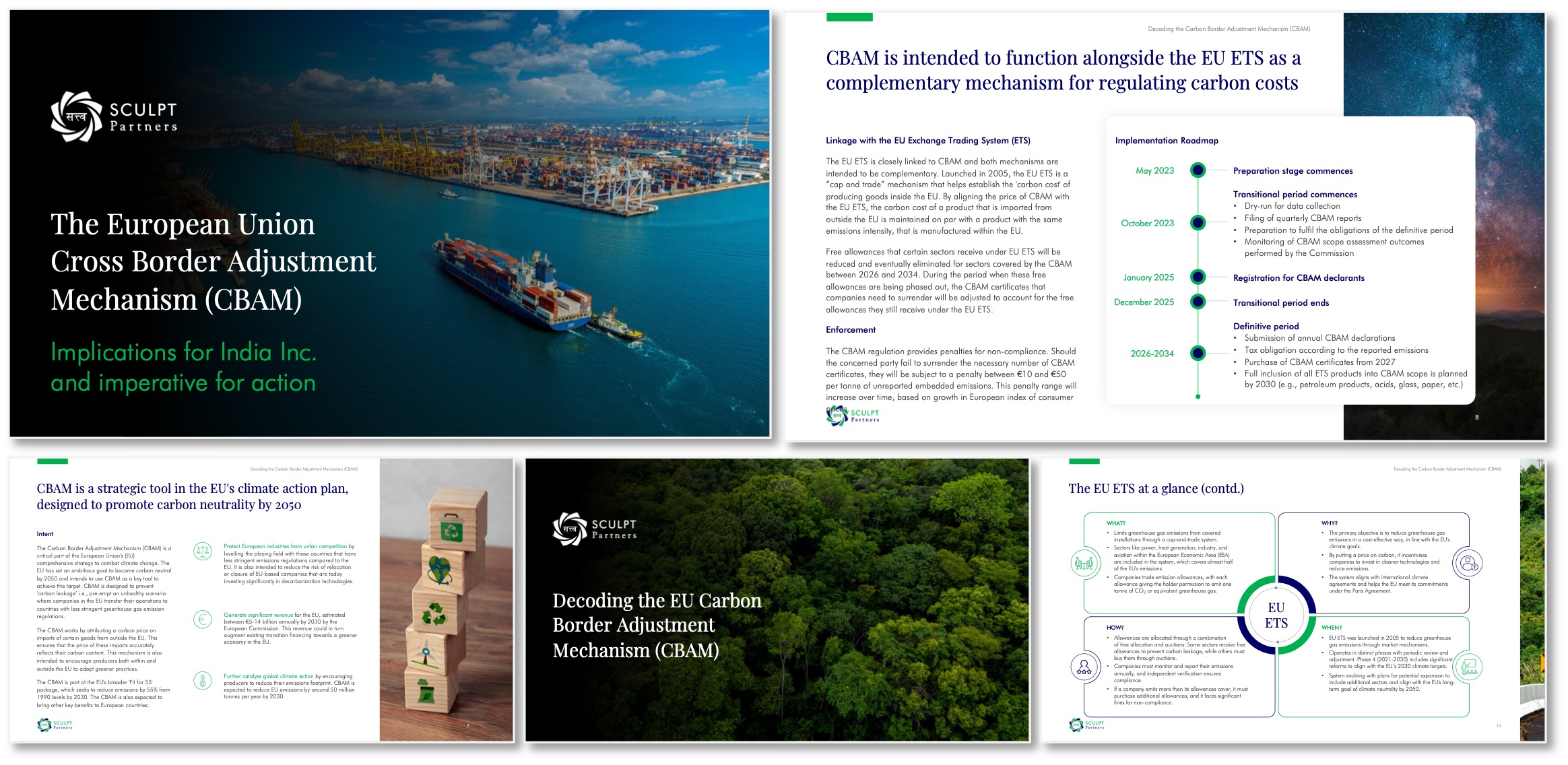
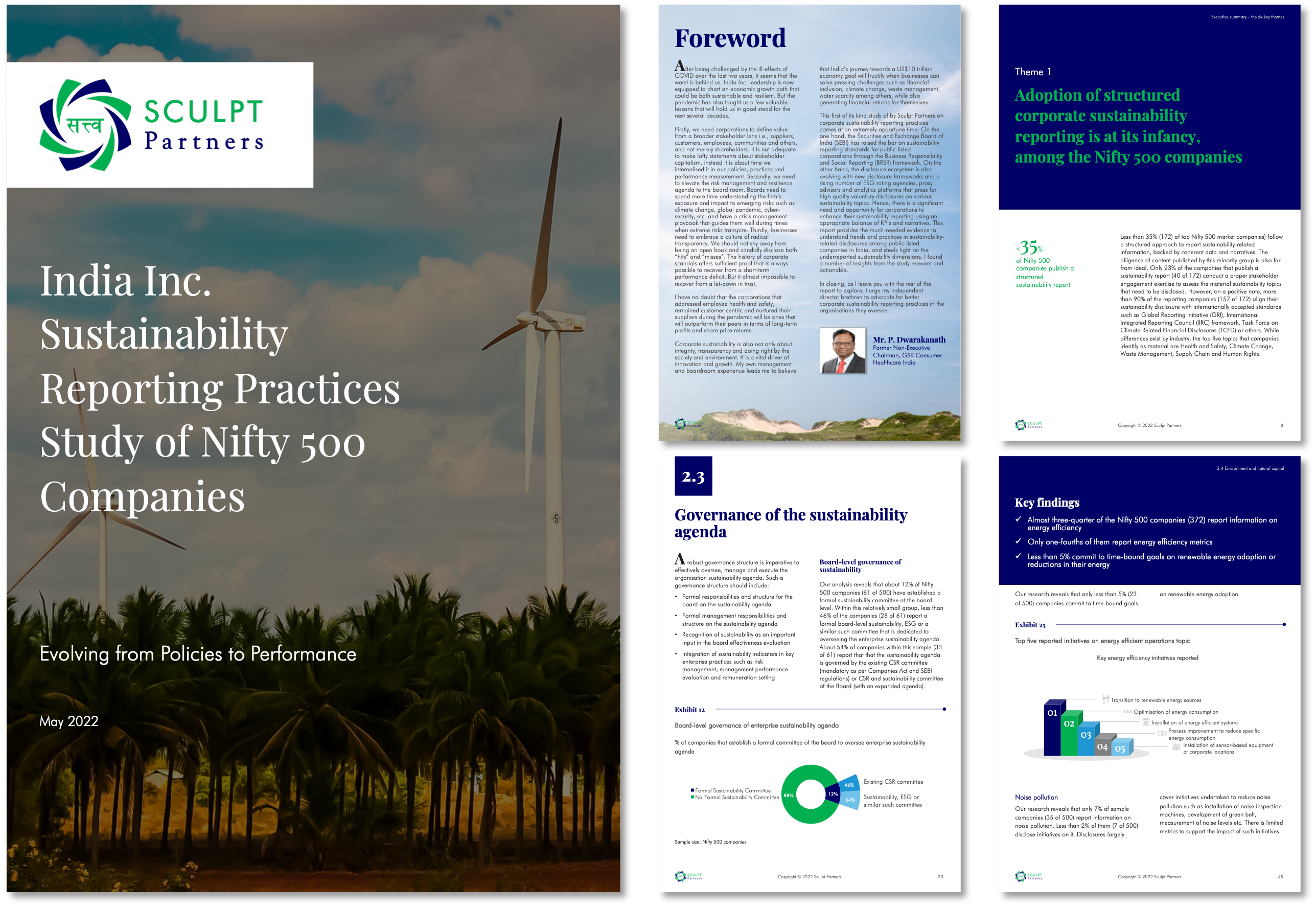
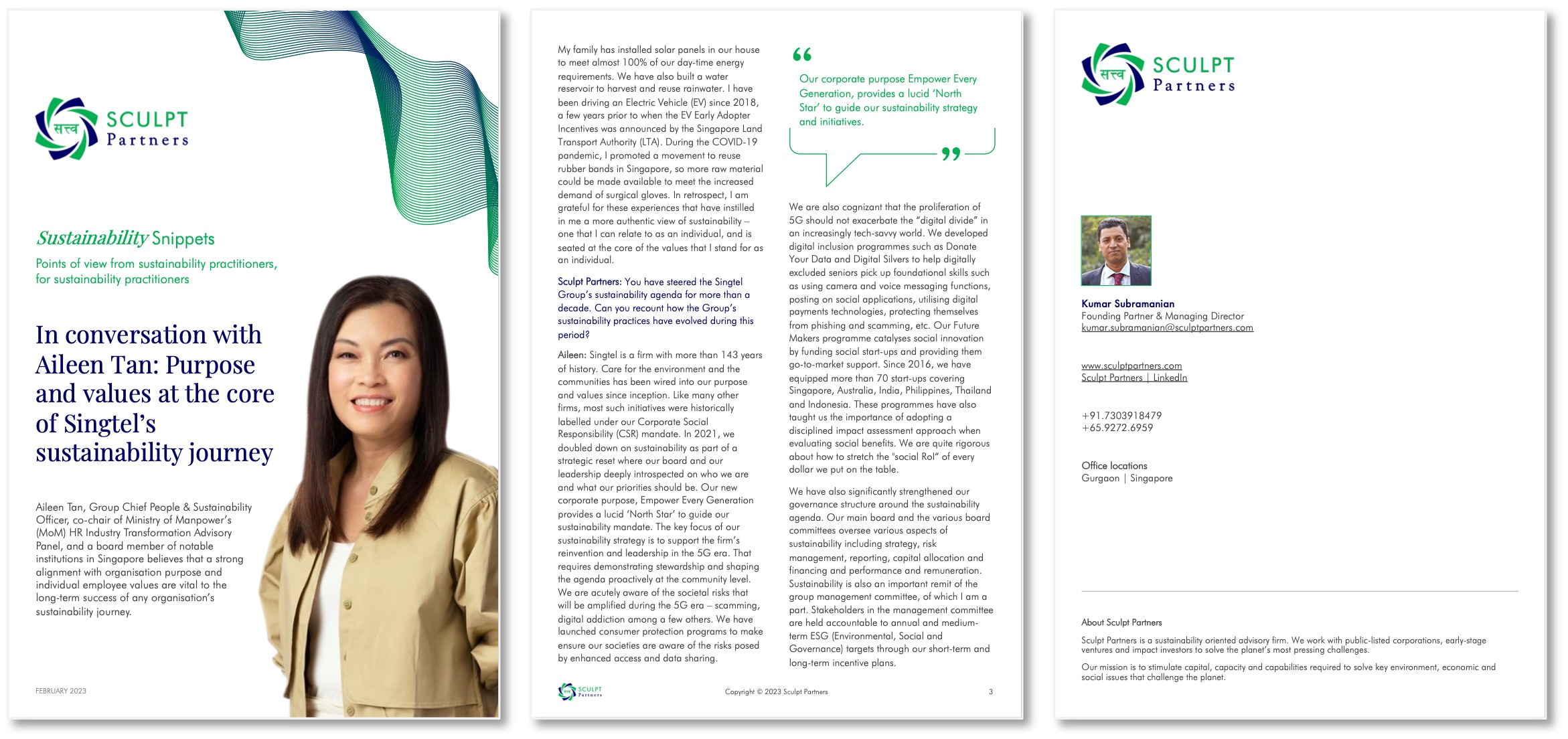
Sculpt Partners is an advisory firm whose thought leadership operates in a different register. Their India Inc. Sustainability Reporting Practices Study of Nifty 500 Companies is a serious piece of research. It covers ESG disclosure practices across 500 listed companies, governance structures, board-level sustainability commitments, and industry-level patterns. It carries a foreword from a senior industry figure. It is the kind of thought leadership that is meant to shape policy conversations and establish Sculpt Partners as a credible voice in India’s sustainability agenda.
That ambition requires thought leadership design that matches it.
A report of this nature is read by regulators, institutional investors, board members, and senior executives. These are not audiences who forgive a document that looks internally produced. They make credibility judgments fast and they rarely revise them. The thought leadership needs to communicate authority before a single finding is absorbed.
The Sculpt Partners report demonstrates what happens when thought leadership design is treated as seriously as the research itself. The cover establishes the weight of the subject. The interior architecture makes a complex, multi-section study navigable. The visual system carries the Sculpt Partners brand consistently while keeping the reader’s focus on the findings. The thought leadership looks like it belongs in the same conversation as the firms and institutions it is addressing.
Cogneesol
Cogneesol is a global business process management and technology services firm serving clients across insurance, finance and accounting, legal, and residential real estate. They operate across geographies, manage complex industry-specific processes, and serve a client base that expects operational precision in everything they receive.
For a firm like Cogneesol, thought leadership is not just a credibility exercise. It is a commercial signal. When you are asking enterprises to hand over critical business processes, the quality of your published thinking directly influences whether a prospect believes you are a strategic partner or a vendor.
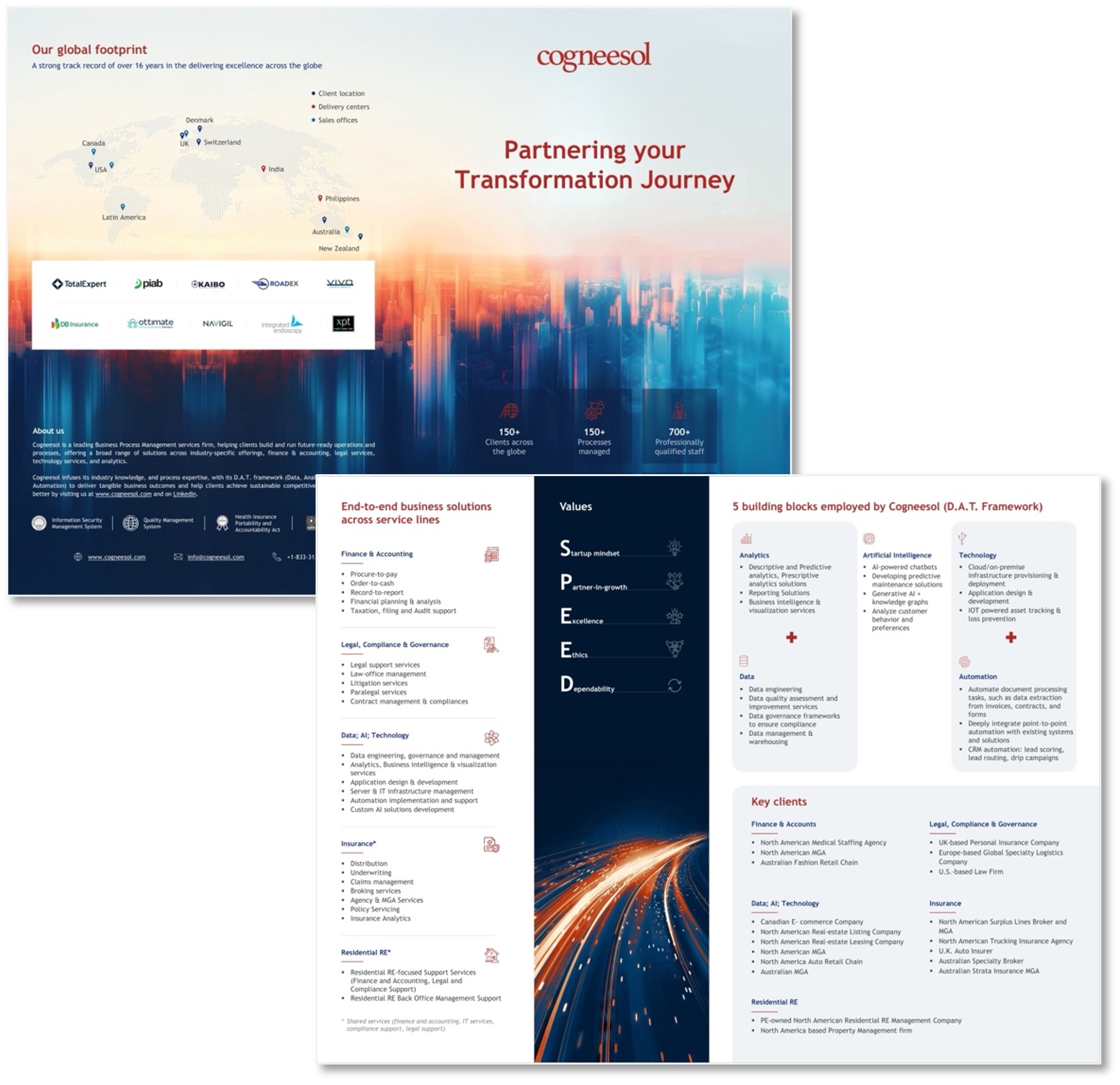
Qcept designed two distinct thought leadership pieces for Cogneesol. The first is a company capability document that maps their global footprint, service lines, D.A.T. framework, and client roster in a format that is visually dense but immediately navigable. It is the kind of document that a senior decision-maker should be able to scan in three minutes and walk away with a clear picture of who Cogneesol is and what they do.
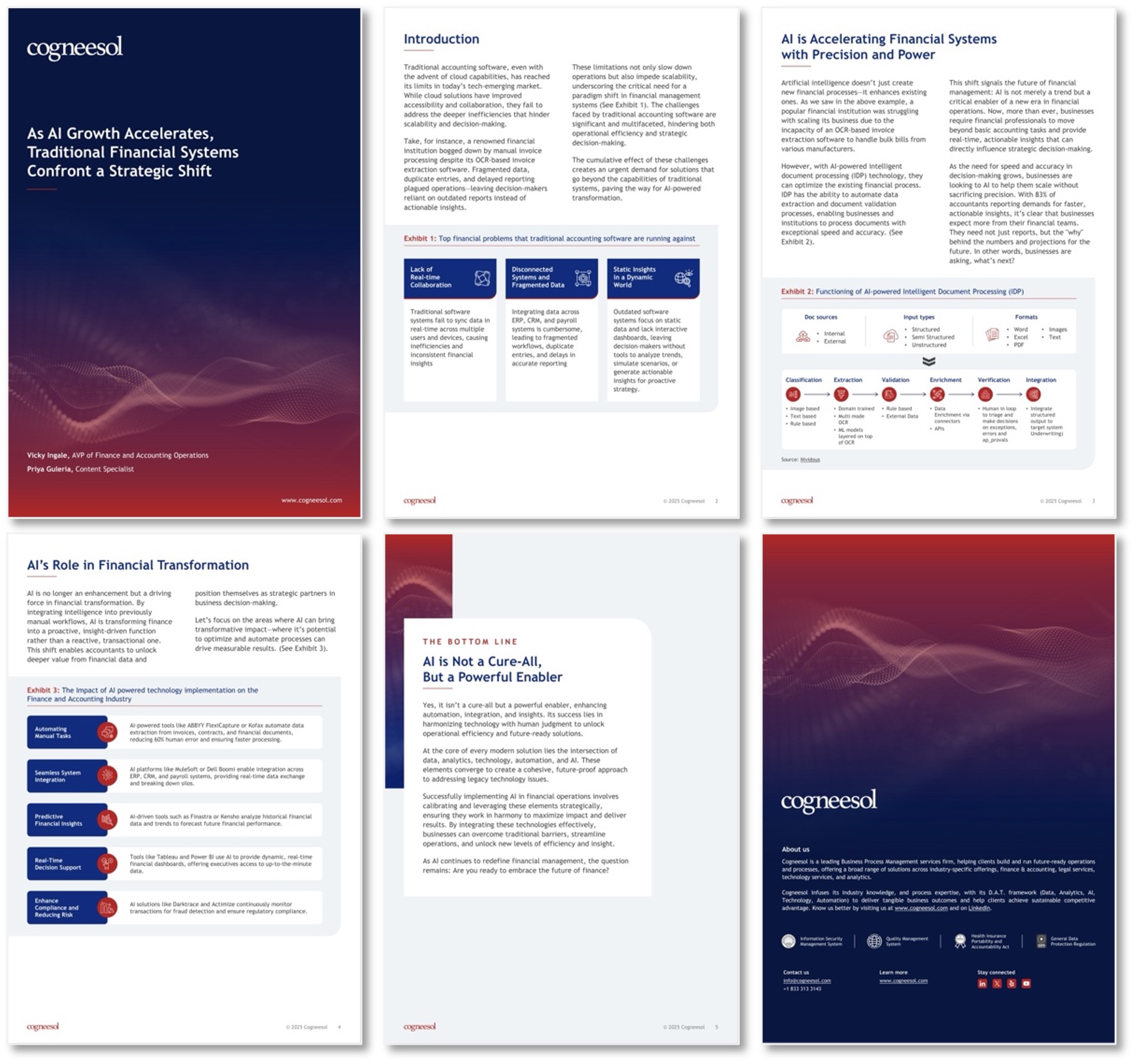
The second is a research report on AI in financial systems, a forward-looking piece that positions Cogneesol’s leadership on one of the most consequential conversations in enterprise services right now. The report carries data exhibits, structured argument, practitioner quotes, and a visual language that sits comfortably alongside the kind of content a CFO or finance operations head would already be reading.
Both pieces are designed in PowerPoint. Both are publication-ready. And both do the same fundamental job: they make Cogneesol look exactly as serious as they are.
The medium nobody expects
Here is something most people assume about publication-quality thought leadership design: it requires specialist software. InDesign. Illustrator. Tools that produce beautiful, locked PDFs that nobody inside the firm can touch once the designer hands them over.
That assumption is worth questioning.
Both the HFS Research report and the Sculpt Partners study were designed in PowerPoint.
Not because PowerPoint was the easiest option. Because it was the right one.
Most consulting and advisory firms live inside PowerPoint. Their analysts use it. Their partners use it. Their clients use it. When a thought leadership report is designed in PowerPoint, it does not become a locked artifact that only the design agency can update. It becomes a living document. The firm can open it, edit a finding, update a data point, add a new section, and repurpose individual slides for a conference presentation or a client briefing, without going back to a designer every single time.
InDesign produces beautiful output. PowerPoint, in the right hands, produces equally beautiful output with one significant advantage: the client actually owns it.
The assumption that PowerPoint cannot carry publication-quality thought leadership is a craft problem, not a software problem. When the craft is there, the medium is irrelevant. What the reader sees is a serious, well-designed research publication. What the client gets is a thought leadership asset they can actually work with.
That is a meaningful difference for firms that publish research regularly and need their thought leadership to remain useful long after the initial release.
Why firms struggle to get thought leadership design right internally
The honest reason is that thought leadership design requires a very specific combination of skills that rarely exist together inside a consulting or advisory firm.
You need someone who understands research content well enough to make structural decisions, not just formatting ones. You need visual communication judgment built for information-dense, professional audiences, not for marketing campaigns or social media. You need the ability to visualize data in ways that add meaning rather than just adding color. You need a working understanding of what signals credibility to a senior reader and what undermines it. And you need the ability to build a design system that holds across an entire report, not just the first few pages.
Most firms have one or two of these things. Very few have all of them in the same place at the same time. Which is why the internal attempt usually produces something that is either visually competent but structurally weak, or content-complete but visually incoherent.
The answer is not hiring a full-time designer. Most thought leadership design work is periodic, tied to publication cycles, and requires specialization that a generalist hire cannot provide. The answer is a partner who has built this capability specifically for the consulting and advisory context, who understands what thought leadership is supposed to accomplish in the market, and who can translate that understanding into a publication that performs.
The questions worth asking before your next thought leadership report goes out
Does the design of this thought leadership reflect the rigor that produced it? Would a reader who does not know your firm trust your thinking based on how the report looks before they read a word? Is your thought leadership visually consistent enough across publications to build recognition over time? Are you treating your published research as the positioning asset it is, or just as a deliverable to check off?
If any of those answers are uncomfortable, the problem is not the research. It is the gap between the thinking inside the thought leadership and how it reaches the world.
The conclusion: Thought leadership that does not look like thought leadership does not work like thought leadership
The firms that lead market conversations do not just produce better research. They present it better. They understand that the design of thought leadership is itself a signal of the quality of thinking behind it. And they build the systems to make that signal consistent across every report, every study, every publication they put into the world.
If your firm produces thought leadership that deserves a wider audience, a longer shelf life, and a stronger first impression, the question is not whether design matters. It is whether the design of your thought leadership is doing justice to the thinking inside it.
Questions we hear often

We use storytelling and design to build high impact presentations for leading brands
PowerPoint design
services and outsourcing
Enterprises, analysts, consultants
Investor pitches
and fundraising narrative
Founders, fund managers
Sales presentations, proposals, and collaterals
Sales & marketing teams
PowerPoint template and visual slide bank
Enterprises, advisory & research firms
CXO presentations
and thought leadership
IT-BPO services & consulting firms
Financial, ESG,
and annual reports
Financial services, large enterprises
Training – PowerPoint design and visualization
Sales team, analysts, consultants
Conference and event presentations
Keynote speakers, event managers